Recently, UNIGO School, in collaboration with the Center for Injury Prevention and Control for Children (CIAP), organized a Fire Prevention, Firefighting, Emergency Evacuation and Escape Skills Training Program for students, teachers, and staff across the school.
The training provided students with practical knowledge and hands-on experience in fire prevention, emergency response, evacuation, and personal safety, helping them become more confident and prepared when faced with unexpected situations.
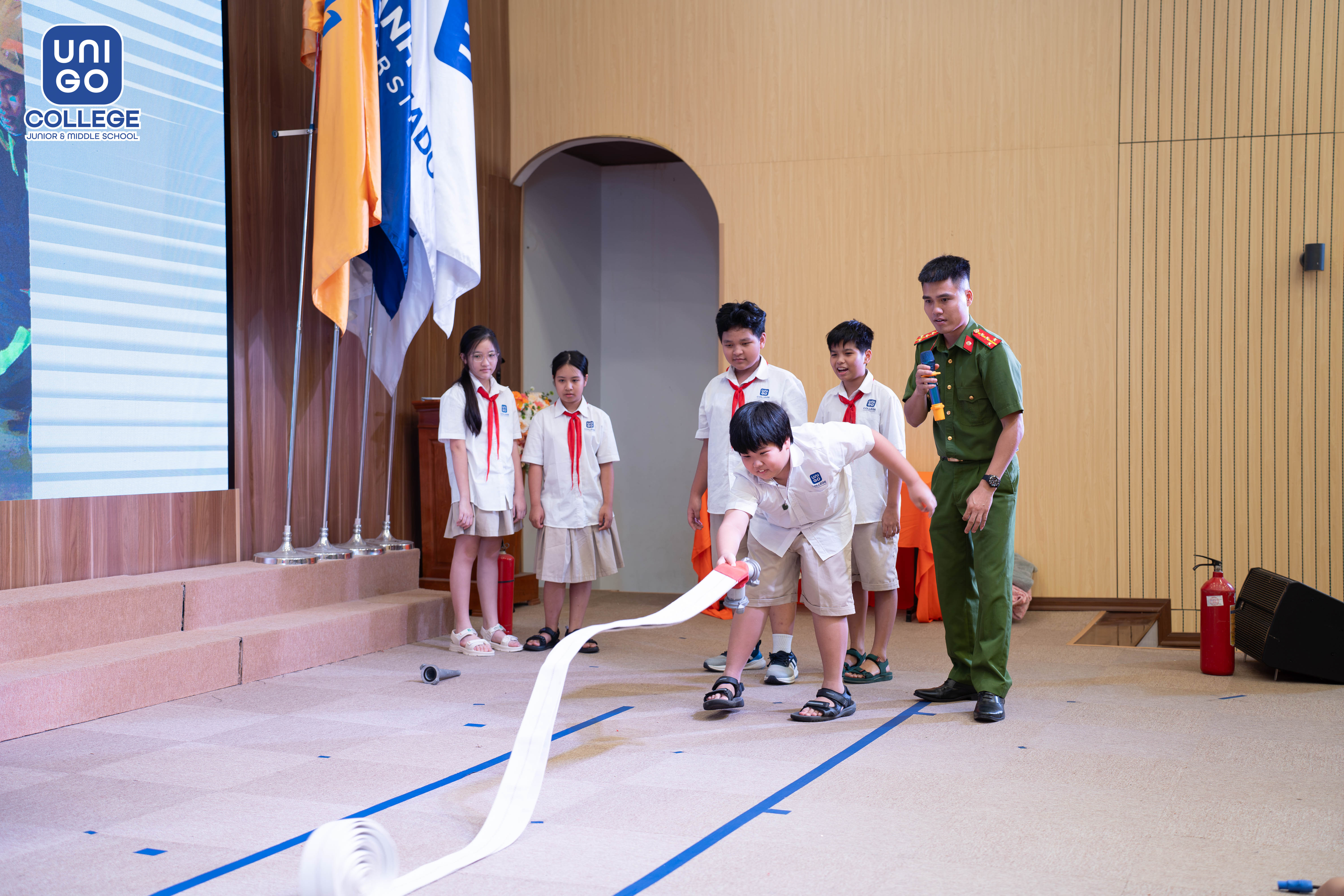

During the training session, students were introduced to common fire hazards that may occur at school, at home, and in everyday life. Instead of learning solely through theory, they had the opportunity to observe demonstrations, listen to professional guidance, and take part in practical activities.
Through realistic scenarios, students learned how to recognize the signs of a fire, respond appropriately when a fire occurs, and understand what they should and should not do in an emergency. These activities helped turn fire safety knowledge into practical skills that students can remember and apply when necessary.
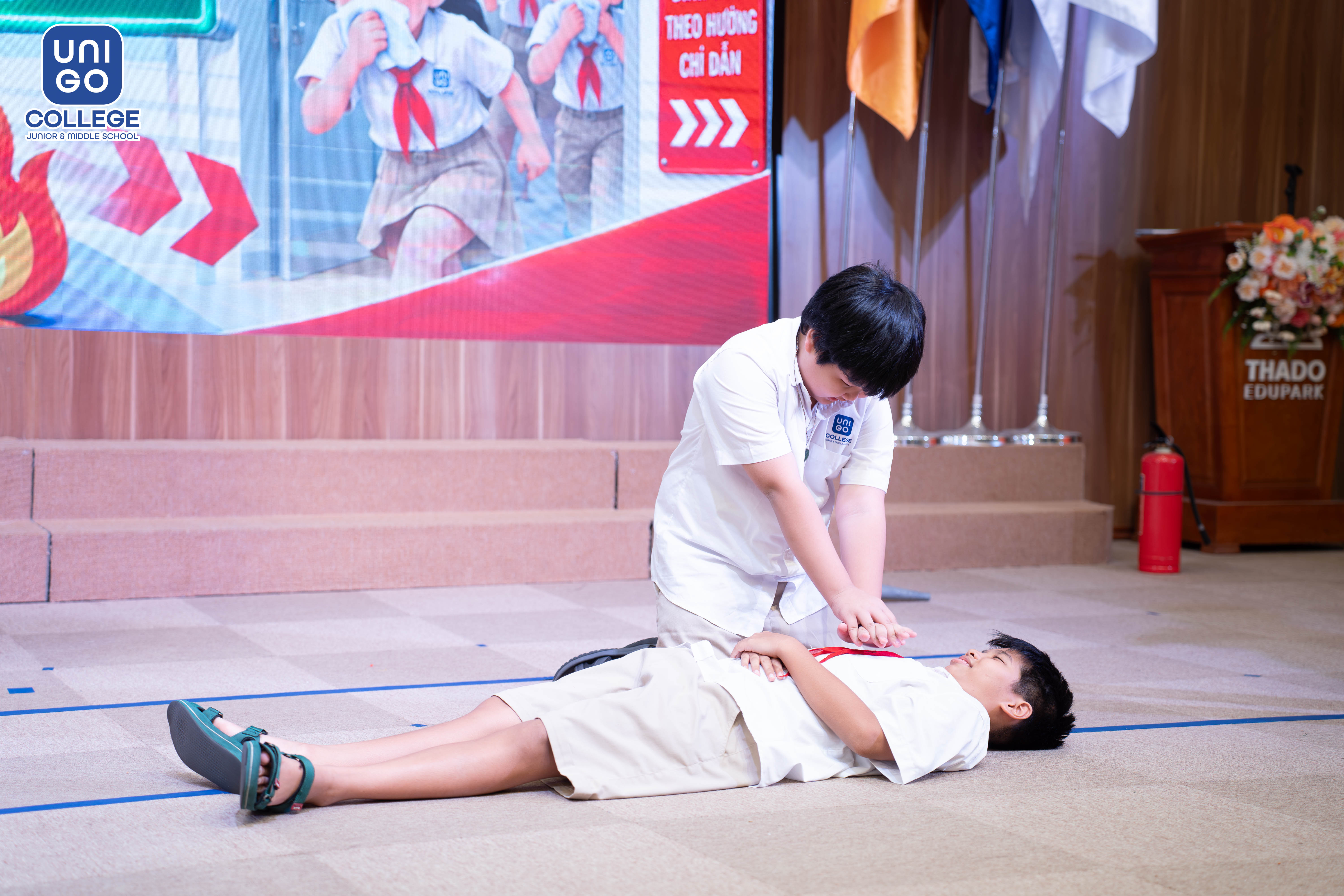
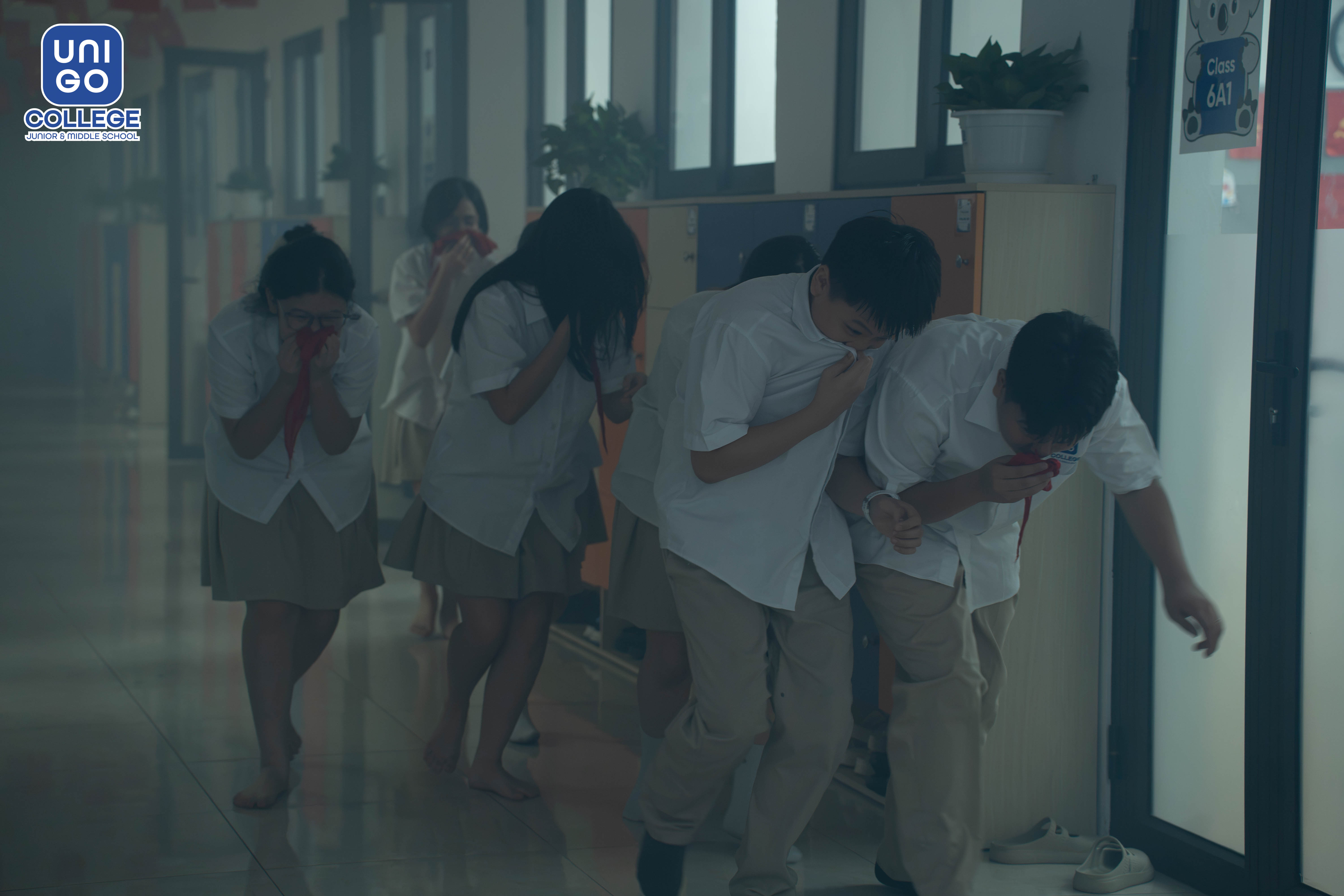
One of the key activities of the training was practicing emergency evacuation and escape skills.
Students were guided on how to move safely during a fire emergency, follow evacuation instructions, and remain calm instead of panicking. They also learned basic first-aid skills and became familiar with firefighting equipment under the guidance of professional instructors.
Through hands-on practice, students gradually developed a more proactive approach to emergency situations, understanding that staying calm and following the right procedures are essential for ensuring their own safety and the safety of others.
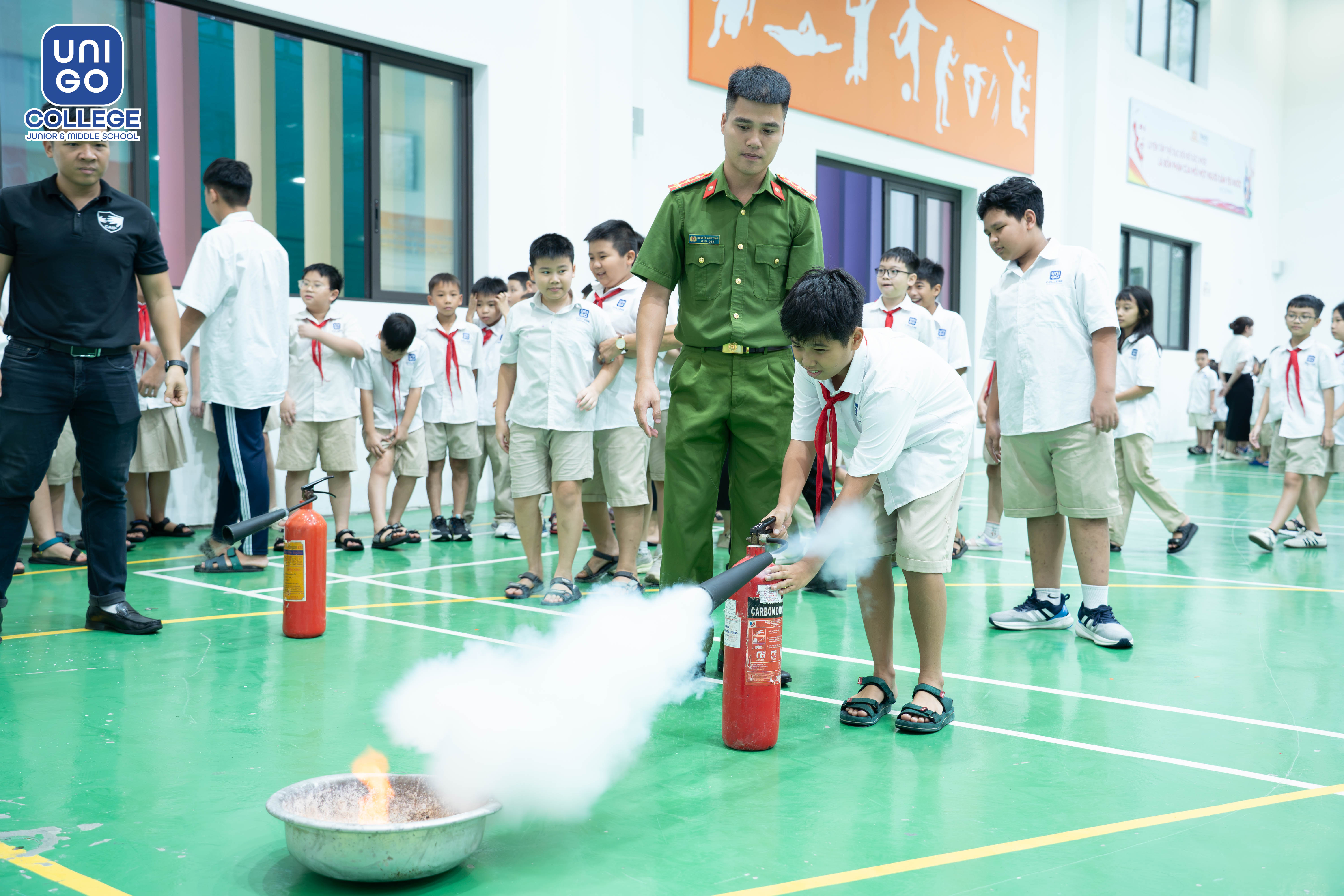
Fire safety is an essential life skill that should be introduced to children from an early age. By participating in practical training sessions, students can develop not only knowledge but also the awareness and confidence needed to respond appropriately in potentially dangerous situations.
At UNIGO, safety education is an important part of the school's holistic approach to student development. Alongside academic knowledge, students are encouraged to develop essential life skills, personal responsibility, and the ability to take care of themselves and those around them.
The fire safety training was therefore more than just a one-day activity. It was an opportunity for students to learn through experience, practice essential safety skills, and build greater confidence in dealing with unexpected situations.